
Sangla Valley
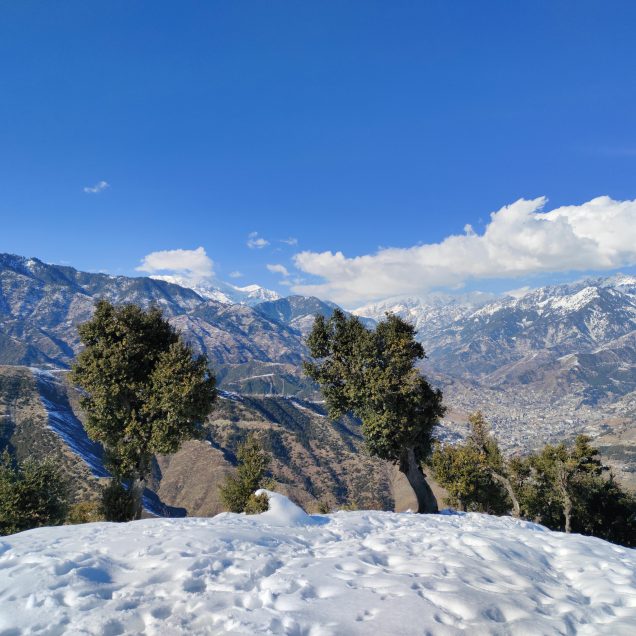
Sangla Valley starts at Sangla and ends at Chitkul. The valley is surrounded by forested slopes and offers views of the high mountains. Its location in the greater Himalayan range gives it a milder climate than the plains.
Until 1989 outsiders could not enter the valley without a special permit from the Government of India, due to its strategic position on the Indo-Tibet/China border.[citation needed] The Baspa River flows in the Sangla Valley which is rich in pine nut orchards, Royal red apples, cherry trees, and glacial streams with trout.[citation needed] The main villages in the valley villages include Chitkul, Rakcham, and Batseri. The nearby Baspa hydel-project has been completed in 2009.
Sights


Map
Info
How To Reach Sangla Valley
Air Travel to Sangla Valley
The nearest Domestic Airport is Jubbarhatti Airport, Shimla, 194 Kms from Sangla. The second nearest Domestic Airport is Bhuntar Airport, roughly three and a half hour drive from Sangla. It is very well connected to many major cities of India like Dharamshala, Chandigarh, New Delhi, Mumbai, Ahmedabad, Bangalore and Shimla.
Land Travel to Sangla Valley
There are many ways to reach Sangla by road. It is 35 Kms from Purbani, 37 Kms from Telangi, 42 Kms from Nachar, 143 Kms from Kumarsain, 167 Kms from Banjar, 199 Kms from Bhuntar and 209 Kms from Kullu through Himachal Pradesh State Road Transport Corporation (HPSRTC) and some private travel services.
Train Travel to Sangla Valley
The nearest Railway Station is Shimla Railway and is located at a distance of 194 Kms from Sangla. Shimla Railway Station is well connected with Kalka Railway Station and with the cities like Gumman, Kumarhatti, Sonwara, Barog, Kandaghat, Kathleeghat, Taradevi and Summer Hill etc.
Things To Do in Sangla Valley
Water Rafting in River Beas
Travellers flock to Rishikesh for Whitewater rafting, however, Manali is an equally good destination for rafting. Beas river is the most popular spot river rafting in Manali with rapids of different difficulty levels. The 20 km long stretch from Manaki to Jhiri, near Bajaura, is among the best stretches for rafting in India. With icy cold water flowing in from Rohtang, thrill-seekers and adventure enthusiasts are in for a treat.
Seek Blessings at Hadimba Temple
Located amidst the Dhungiri Van Vihar forests, the Hadimba temple is popularly referred to as the Dhungri temple by locals. The temple is of great importance to Hindu pilgrims, as it is dedicated to Hidimba Devi, the wife of Bhima who was one of the 5 brothers, in the Indian epic Mahabharata (mythological epic).
A Taste of Old Manali
Nothing like the tourist packed Mall road and main Manali market, Old Manali has a charm of its own. A paradise for backpackers, shop till you drop in this quaint town and don’t forget to brush up your bargaining skills. Old Manali is the perfect place to experience the city’s vibrant nightlife. You can either walk or rent a two-wheeler to make your way through the narrow lanes. Be sure to go here in the evening just before sun sets, to grab a hearty meal at one of the many cafes after exploring the town. This beautiful area of Manali is home to few of the many ancient temples like Hadimba and Manu temple.
A Heaven for Thrill-Seekers
Owing to the vast meadows and hilly terrain, adventure activities ought to top your list of things to do in Manali. There are ample destinations for tourists to indulge in adventure sports like rafting, paragliding and trekking. However, Solang valley is definitely one of the best spots for adventure sports in Manali. In the summers, you can enjoy activities like paragliding, water rafting and zorbing. The visibility is better during the months between March-June for paragliding, and snowfall is not a safety hazard. The cost for paragliding ranges from INR 500-1,000 to INR 2,000-5,000 depending on the duration and season. Another exciting activity here is Zorbing. The cost for zorbing is approximately INR 500 but may vary depending on the season. Zorbing lasts for 5-10 minutes and the instructor usually guides the client downhill.
Spiritual Healing at the Manali Gompa
Built in 1960 by Tibetan refugees, The Gadhan Thekchhokling Gompa Monastery is a popular Buddhist religious centre. It is also one of Manali’s main tourist attractions. The monks at Gompa monastery preach non-violence and peace and welcome tourists from all over, to meditate with them.
Tourist Attraction In Sangla Valley
Kamru Fort
Located in the picturesque Solang Valley, Kamru Fort is a portal to a bygone era. The unique 3-story wooden fort is a 15th-century architectural marvel. The fort has now been developed into a temple dedicated to Goddess Kamakhya. The idol of the goddess is placed on the third floor and is said to have been brought from Guwahati. The temple has huge religious importance among the locals.
Bering Nag Temple
One of its kind, Bering Nag Temple holds a religious importance among people. The temple is dedicated to Lord Jagas, a form of Lord Shiva. It is constructed with wood and can be considered as an architectural marvel from olden times. Every year in months of August and September, Phulaich Fair is celebrated in the temple which makes it all more interesting attraction. It is 2 km from Sangla Village.
Chitkul Village
Chitkul is a small hamlet in this region of Himachal Pradesh. The interesting fact about this village is that it is the last inhabited village near Indo-Tibetan border. The beauty and charm of this village are no less than a fairyland. It is located 20 km from Sangla. There is even a temple of a local goddess, Chitkul Maathi, which holds huge importance for people from Kinnaur district. This village experiences heavy snowfall in winters.
Why Visit Sangla Valley?
Why visit Sangla Valley?
The town is so famous; the Baspa valley is often called the Sangla Valley. Blessed with apple orchards, apricots, walnuts, cedar trees, glacial streams with a lot of trout fish, and, of course, the fir trees; Sangla is a nature lover’s paradise.
Sangla Valley Facts
- Rich heritage
- Hanuman’s mother meditated here
- A mini-Israel exists near Manali
- A ghost temple on Gata Loops
- India’s highest sky bicycle track
![Kinnaur and Kalpa Tour From Chandigarh - [8night / 9Days]](https://www.hptourtravel.com/wp-content/uploads/2026/01/kinnaur_vilage-636x426.jpg)
![Spiti Circuit Tour Package From Chandigarh - [10Nights / 11Days]](https://www.hptourtravel.com/wp-content/uploads/2022/07/Spiti_Gallery_Image_4-636x426.webp)
